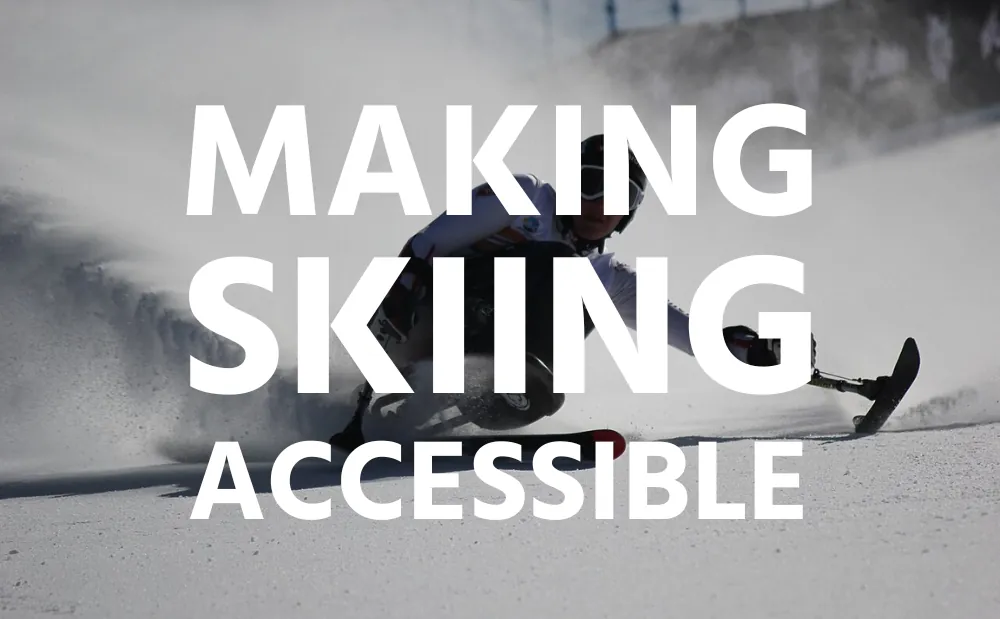
Many ski areas have adapted over the last 50 years to make skiing and snowboarding accessible for disabled skiers who want to take a ski holiday.
This started with lifts, which in the early days were not designed to cater for the adaptive skiing and snowboarding community.
In the 1970s, sit-skiing was still a fringe experiment, conducted by determined skiers and instructors who adapted military rehabilitation equipment and improvised seating onto skis. Ski lifts, however, were not ready for them.
Fixed-grip chairlifts, T-bars, and button lifts moved too fast, forcing lift attendants to often stop the lifts entirely.
Snowboarding, a sport which was fairly new to the mountains, faced similar challenges with narrow chairs and no safety bars.
During this period, lift companies did not design for these users, but the growing presence of adaptive skiers quietly began to expose the limits of existing lift technology.
A turning point
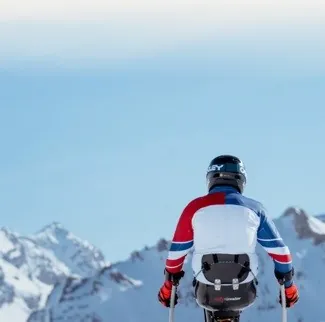
The 1980s and early 1990s marked a turning point as sit-skis became more refined and snowboarding grew in popularity. The introduction of detachable chairlifts and equipment which allowed sit-skiers to detach themselves when being towed by a button or T-bar changed everything.
Detachable chairs could slow to walking pace at entry and exit points, giving operators the precious seconds needed to guide mono-skis and bi-skis safely onto seats. Snowboarders benefited too, as wider chairs and safety bars reduced awkward loading angles.
Lift manufacturers began paying attention to how adaptive equipment interacted with their systems, subtly reshaping chair geometry, grip spacing, and station layouts to accommodate seated riders with outriggers and stabilising frames.
Gondola revolution
By the late 1990s and 2000s, more gondola lift systems were emerging and this was a revolution for sit-skiers. Level floors, wide doors, and enclosed cabins meant that sit-skis could roll or be guided straight inside.
For adaptive snowboarders, particularly those with limited balance or limb difference, gondolas offered warmth, stability, and dignity. Lift companies increasingly worked with adaptive skiing organisations to test cabin dimensions, door timings, and interior layouts, recognising that these features reduced risk while expanding who could access the mountain.
Today, modern lift systems carry the legacy of those decades of adaptation. High-backed chairs, predictable loading zones, operator-controlled speeds, and cabins designed to accommodate sit-skis as standard are now common in major resorts. Snowboards and sit-skis are no longer afterthoughts but expected.
What began in the 1970s as a struggle against machinery not built for disabled bodies has evolved into a design philosophy where lift technology actively supports adaptive skiing and snowboarding, quietly transforming access to the mountains.
An adaptive-friendly resort by design
Tignes, which hosted the 1992 Paralympic Games, is a good example of how ski areas have adapted to cater for disabled skiers. The French resort has a long-standing commitment to making skiing, snowboarding, and winter sports in general accessible to all on and off the slopes.
This has resulted in Tignes being chosen to host a recent FIS Para Alpine Skiing World Cup (2–6 February) and the 2027 Para Alpine Skiing World Championships.
Accessibility in Tignes extends beyond competitions. The resort has made investments to ensure that visitors with disabilities can enjoy the mountains independently and confidently.
These investments include adapted accommodation, accessible transport and public spaces, trained tourist office teams, hearing-loop systems, clear piste mapping for skiers and snowboarders with reduced mobility, and ski schools that offer adaptive lessons with specially trained instructors.
In 2024, Tignes signed the regional H+ Accessibility Charter, reinforcing its commitment to continuous improvement in welcoming people with disabilities, from leisure skiers to international athletes.
This collective approach has brought together the resort, accommodation providers, lift companies and event organisers, ensuring inclusion is not an add-on, but a shared responsibility.
Elite sport as a catalyst for change
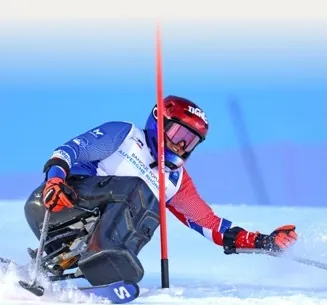
Hosting major para-sport events has also identified Tignes as a training ground. Many of today’s leading para-alpine skiers regularly train in the ski area, drawn by its altitude, terrain diversity and adapted facilities.
Looking ahead to 2027
Preparations are already underway to make even more improvements for disabled skiers and snowboarders, and test events are being organised to ensure Tignes will deliver a top-class Para Alpine Skiing World Championships in 2027.
The recent World Cup race and next year’s World Championships competition demonstrate Tignes’ commitment to providing accessible infrastructure that serves both elite athletes and the broader adaptive skiing and snowboarding community.
Bigger choice than ever
The majority of European ski areas now cater for disabled skiers and adaptive sit-ski or snowboard users, with accessible lifts, adaptive programs, trained instructors, or dedicated services. Here are a few more examples:
Val Thorens, France
Part of the Three Valleys area with wheelchair-accessible lifts, ramps, and reduced lift passes for disabled skiers and their guides.
Méribel, France
Inclusive ski schools offering sit-skiing and adaptive instruction alongside adapted lifts and infrastructure.
La Plagne (Paradiski), France
Adaptive skiing services with sit-skis and specialist equipment; facilities and terrain well-suited for people with disabilities.
Les Arcs, France
Main lifts accessible to handiskiers and discounted passes; disabled parking and facilities around the resort.
Les 2 Alpes, France
Offers disabled discounts on lift passes and wheelchair access to key lifts (e.g., Jandri Express) with sit-ski access on suitable lifts.
Grandvalira, Andorra
Adaptive skiing across Canillo, Soldeu, and El Tarter with trained staff and reduced lift speeds for assisted loading.
Verbier/4 Vallées, Switzerland
Home to ES Adaptive, a well-equipped adaptive snowsport schools catering to sit-ski, bi-ski, visual impairment, and other needs.
Schladming-Dachstein, Austria
Inclusive programs through local organisations offering adapted skiing opportunities for people with physical or cognitive disabilities.
Livigno, Italy
Specialist, trained instructors for skiers and snowboarders with physical and sensory disabilities. Available equipment includes the Borney Adapted Snowboard System. Accessible parking, bars, and restaurants.
For more information on these resorts, and the range of accommodation available through Ski Line, click on the resort name above. You can also speak directly to the Ski Line experts using the contact details or online chat facility on the Ski Line website.
Chat with our experts
For help and advice on booking your next ski holiday, call our award-winning ski holiday experts on:
020 8313 3999