When it comes to choosing a destination for your ski holiday, bigger areas usually mean better value from your ski pass if you measure value by the number of kilometres of piste available. A pass covering hundreds of kilometres in a major linked ski area can offer an enormous amount of skiing for the money.
But there is another way of looking at value, particularly for families watching their holiday budget. You don’t necessarily need hundreds of kilometres of pistes to have a memorable week’s skiing and choosing a smaller ski area with a cheaper pass can save a considerably amount of money.
Contents
Plus, the savings are not just about the price of the lift pass. A smaller resort will often offer cheaper accommodation, and less expensive food and drink menus in the restaurants and bars both on and off the mountain.
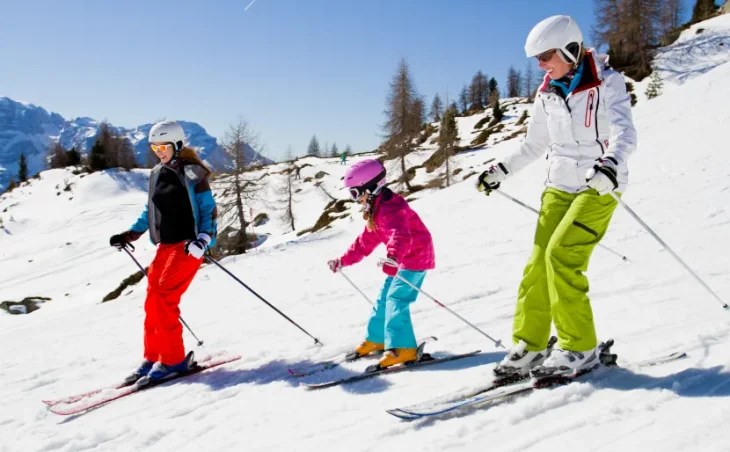
For families in particular, the difference between buying an expensive six-day pass for a huge ski domain and a more modest pass for a smaller area can add up to hundreds of euros. The question, therefore, isn’t simply which pass gives you the most skiing and snowboarding for your money, but which pass gives you the skiing you actually need at a price that leaves room in the budget for everything else that makes a ski holiday enjoyable.
Large-linked ski areas attract skiers and snowboarders with promises of hundreds of kilometres of pistes, dozens of lifts, and the ability to ski from one resort to another without taking your skis off. This certainly is attractive, but one question worth asking is how much of that skiing will you actually use?
A family staying for a week may spend a considerable amount on lift passes for an area which links a few different ski villages, when, in reality, younger children will probably spend much of their time on nursery slopes and intermediate skiers may happily repeat favourite runs they have mastered and feel comfortable on.
Paying for access to a vast network of pistes can therefore be rather like paying for an all-you-can-eat buffet when you are not really that hungry.
With many weekly passes in large-linked areas north of the €400 mark, this adds up to quite an outlay for a family of four.
Here are a few examples of smaller ski areas but this is by no means an extensive list and the experts at Ski Line can give you many more choices. You may also find that moving a few kilometres away from a resort centre makes a surprisingly large difference to the price.
France
In Les Deux Alpes, a French resort which has become popular with British skiers and snowboarders, a weekly (6-day) pass for an adult is €333, and €266.50 for a child. There are even free passes for under 5s and over 72-year-olds.
Val Cenis is one of a cluster of six traditional villages in the Haute Maurienne Vanoise, a combined weekly pass is approximately €230 – €250.
Le Corbier (Les Sybelles) is a large but lesser-known interconnected domain where a weekly pass will cost you roughly €270 – €290.
Morzine and Les Gets are both part of the massive Portes du Soleil ski area. If you buy a localised sector pass rather than the whole 650km network, it costs around €270 – €280, and then you can always treat yourself to a day pass for the whole area if you want to go exploring.
Austria
The mid-sized and traditional area of Ski Juwel Alpbachtal Wildschönau offers a 6-day peak adult pass for around €310 – €330.
If you buy your passes for Söll (SkiWelt Wilder Kaiser – Brixental) in advance you can secure 6-day passes for around €320 – €340.
Italy
Italy consistently provides cheaper lift passes thanks to lower operational fees and highly competitive regional pricing.
Bardonecchia is generally regarded as the cheapest ski resort in Western Europe. A weekly 6-day pass typically hovers around €200 – €210.
In the neighbouring linked resorts of Sauze d’Oulx and Sestriere (Vialattea / Milky Way Area) a weekly pass for its 400km of runs costs around €260 – €275.
Switzerland
Switzerland is the most expensive skiing country in Europe. Its budget ski pass options are usually lesser known lower-elevation villages. However, many of its ski areas operate dynamic pricing and there are savings to be made during the quieter weeks. In Engelberg, an adult ski pass during the busy half term holidays will cost you in excess of €450, but there are cheaper options available throughout the season.
Bulgaria
Bulgaria, which officially adopted the euro on January 1, 2026, continues to offer some of the lowest priced weekly ski passes.
Rates for this season have not been published yet, but last season the cost of a weekly (6-day) adult lift pass in Borovets was €266 (£220 approx); Pamporovo €280 (£231 approx); and Bansko €320 (£264 approx).
A smaller ski area can mean a cheaper lift pass, potentially cheaper accommodation, more manageable eating costs and a less expensive après-ski lifestyle. Add shorter journeys, fewer queues, a friendlier atmosphere and the possibility of discovering somewhere that still feels like a real mountain community, and the supposedly second-best option suddenly starts looking rather attractive.
For more info on the resorts mentioned here and other smaller resorts, and the range of accommodation available through Ski Line speak directly to the Ski Line experts using the contact details, or online chat facility. You will find these contact details on the Ski Line website. They can also provide information on lift pass prices and any offers that can help save you money on your ski holiday.
Chat with our experts
For more information and to book your next ski holiday, call our ski holiday experts on:
020 8313 3999