If you’re thinking about skiing this winter, there’s an interesting weather story developing that could end up having an impact on the Alps.
El Niño is now firmly established in the Pacific, and the latest forecasts from the World Meteorological Organisation have it strengthening further through the autumn, potentially into one of the stronger events we’ve seen in recent years. It’s expected to stick around through the winter and into early 2027, which is worth knowing if you care about snow.
That doesn’t mean we’re promising a bumper season. Long-range weather forecasting rarely works that neatly, and El Niño’s effect on the Alps is a lot less clear-cut than people sometimes assume.
What El Niño actually is
El Niño is a periodic warming of the tropical Pacific Ocean, and it happens every few years. On its own that sounds like it has nothing to do with skiing in France, Austria, Italy or Switzerland, but weather doesn’t stay in one place; a shift in ocean temperature on the other side of the world can nudge the jet stream and change the routes that storm systems take across Europe.
Those storm tracks matter a lot for the Alps. Get the right mix of cold air and moisture and you get a proper dump of snow. Get the wrong mix and the same system turns into rain lower down the mountain instead.
Does that mean more snow?
Not necessarily, and it’s worth being honest about why. The link between El Niño and winter weather is much stronger and better understood in North America than it is here. In Europe the effect is real but considerably weaker, and it tends to show up more in the second half of winter than the first.
There’s research showing El Niño can shift Alpine precipitation patterns, but it’s one factor among several, not the dominant one. We wouldn’t look at a strong El Niño forecast and assume the Alps are about to get buried. What we would say is that it’s another interesting piece of the puzzle this winter, and one that forecasters will be watching closely as the season gets nearer.
Why one resort can do so much better than the next
Anyone who’s skied in the Alps knows how much snowfall can vary from one place to another, sometimes within the same weekend. A storm coming off the Atlantic tends to favour the French Alps and western Switzerland. One arriving from the south is often better news for the Italian side. Cold air and moisture coming down from the north or northwest can be great for the northern Austrian resorts.
The terrain plays a big part too; it’s entirely possible for one resort to wake up to 40 or 50cm of fresh snow while somewhere two hours away barely sees any. That’s why we’re always a bit cautious about talking in terms of a “good” or “bad” winter for the Alps overall. It can be a great few weeks in one valley and pretty average in the next.
Altitude is still your best bet
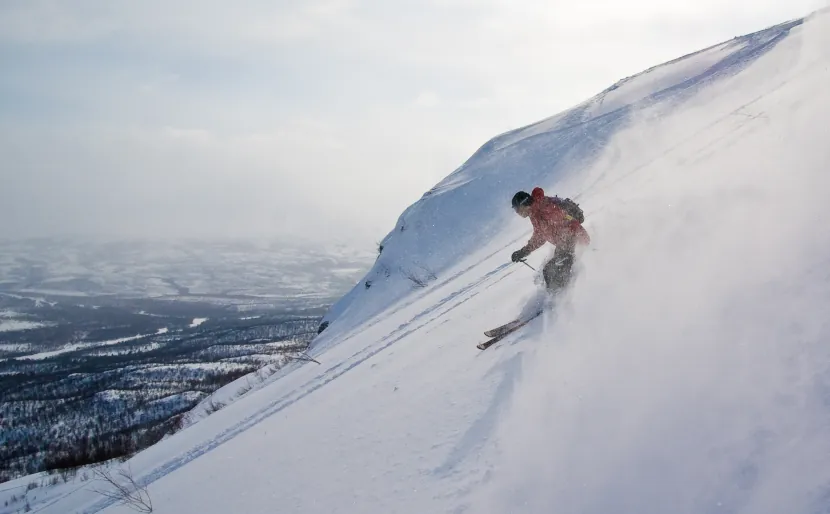
Whatever El Niño ends up doing, altitude remains one of the most reliable things to look for if snow is the priority. If it’s cold enough, precipitation falls as snow. If it isn’t, it turns to rain, and that’s true regardless of what any seasonal forecast says. Higher resorts simply have more of a buffer, especially as the winter wears on.
A few we regularly point people toward for their combination of altitude, terrain and snowmaking:
- Val Thorens – 2,300m
- Tignes – 2,100m
- Cervinia – 2,050m
- Les Arcs – skiing up to 2,000m and above
- La Plagne – skiing up to 2,100m
- Obergurgl – 1,930m
- Val d’Isère – 1,850m
The village height isn’t the whole picture either; most of these give you lift access well above where you’re staying, so you’ve got options even when conditions lower down aren’t ideal.
So could this be a big one?
We genuinely don’t know, and anyone who tells you with confidence either way is guessing. Most skiers can remember a proper snowy winter, the kind where you wake up to another 30cm overnight, the cars vanish under it, and everyone’s straight out the door chasing fresh powder. There’s a decent amount of interest around this year’s El Niño forecast, but a strong event doesn’t automatically translate into huge snow totals in the Alps. Too many other things have to line up as well.
What we can say is that El Niño is set to be a major presence through the season, which makes it worth keeping an eye on.
Why we’d still say book early
Waiting until December to see how the snow’s looking isn’t really a strategy; it’s just a way of booking later and paying more for the privilege. Once the first good snowfall photos start doing the rounds, everyone has the same idea at once; the popular chalets go first, hotel rooms get tighter, flights creep up, and the busy school-holiday weeks become a scramble. The high-altitude resorts that tend to offer the best reliability are usually among the first to sell out.
Rather than trying to guess what the weather’s going to do in your specific week, it makes more sense to pick a resort that gives you a good chance whatever happens, decent altitude, plenty of skiing above 2,000m, solid snowmaking, and a big enough area to have options if one side of the mountain isn’t performing. Get that right, and you can spend your energy on finding the accommodation and flights that actually work for you.
We’re not going to sit here and predict a metre of snow everywhere this winter. But a strong El Niño gives us something genuinely interesting to watch heading into 2026/27, and the good news is you don’t need to get the forecast right yourself, pick the right resort and you’ve got a decent chance of great skiing even if the weather doesn’t cooperate.
Chat with our experts
Thinking about skiing this winter? Give us a call, tell us when you want to travel, who’s coming and roughly what you’d like to spend, and we’ll help you find somewhere that gets the balance of snow reliability, skiing and value right.
020 8313 3999